
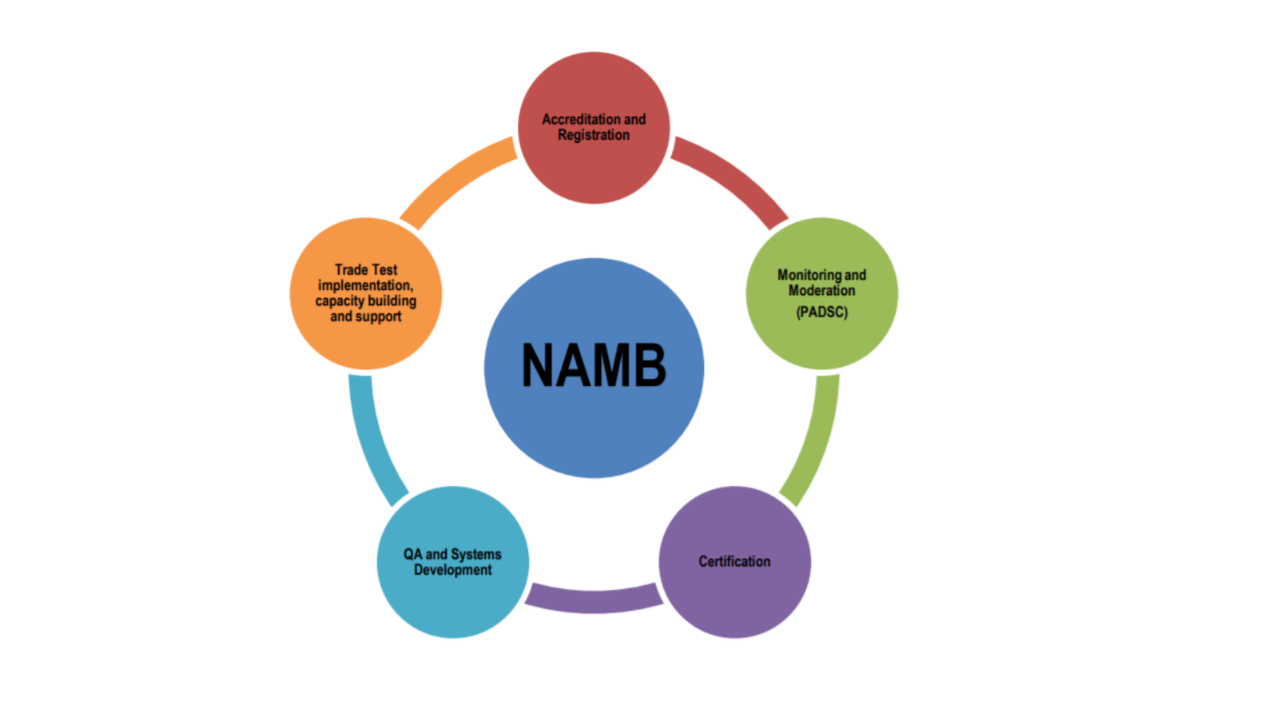
What is NAMB?
The National Artisan Moderation Body (NAMB) was established to strengthen artisan development in South Africa.
Working alongside the Quality Council for Trades and Occupations (QCTO), NAMB has historically played a key role in artisan development by supporting the national trade testing system, monitoring quality, and helping ensure artisans meet occupational standards.
Its work supports apprentices, employers, training providers, trade test centres, industry, and government.
Every Qualified Artisan Has to Prove Their Skills
South Africa relies on skilled artisans to build homes, maintain power stations, repair heavy machinery, install electrical systems, manufacture products, and keep industries running.
But becoming an artisan is about more than completing classroom training. Before someone can be recognised as a qualified artisan, they must demonstrate that they can perform their trade safely and competently in a real working environment.
This is where the National Artisan Moderation Body (NAMB) plays an important role.
Whether you’re training to become an electrician, boilermaker, diesel mechanic, fitter and turner, millwright, welder, plumber or another artisan, understanding NAMB is an essential part of your career journey.
Why Skilled Artisans Matter
South Africa continues to experience shortages in many technical occupations.
Qualified artisans are needed across industries such as:
- Manufacturing
- Mining
- Construction
- Energy
- Engineering
- Transport
- Agriculture
- Chemical Industries
- Automotive
- Infrastructure Development
Without qualified artisans, economic growth, infrastructure projects, and industrial development become far more difficult.
The Journey to Becoming an Artisan
Although requirements vary by occupation, most artisan pathways follow a similar structure.
Step 1 — Complete Occupational Training
Learners complete an approved apprenticeship or occupational qualification.
Step 2 — Gain Workplace Experience
Practical workplace learning allows apprentices to develop real-world technical skills under supervision.
Step 3 — Build Workplace Competence
Throughout training, apprentices demonstrate competence across the practical requirements of their trade.
Step 4 — Complete the Trade Test
Eligible apprentices complete a nationally recognised trade test at an accredited trade test centre.
Successfully completing the trade test confirms occupational competence as an artisan.
Trades Commonly Supported
Many artisan occupations form part of South Africa’s priority skills list.
Examples include:
- Electrician
- Millwright
- Boilermaker
- Diesel Mechanic
- Fitter and Turner
- Mechanical Fitter
- Instrument Mechanic
- Welder
- Plumber
- Bricklayer
- Carpenter
- Refrigeration Mechanic
- Automotive Electrician
- Rigger
These occupations remain in demand across multiple industries.
Organisations That Work Together
South Africa’s artisan development system involves several organisations.
QCTO
Develops occupational qualifications and quality assures the occupational qualification system.
SETAs
Support apprenticeships, learnerships and workplace learning within specific industries.
NAMB
Supports artisan development and the national trade testing system.
SAQA
Maintains the National Qualifications Framework and recognises qualifications nationally.
Together these organisations help produce competent, nationally recognised artisans.
Career Opportunities After Qualification
Qualified artisans can pursue careers in:
- Manufacturing
- Mining
- Construction
- Utilities
- Engineering Companies
- Municipalities
- Transport
- Agriculture
- Private Industry
Many artisans also establish successful businesses after gaining experience.
Why NAMB Matters
South Africa’s economy depends heavily on skilled artisans capable of maintaining infrastructure, supporting manufacturing, expanding energy capacity, and strengthening industrial productivity.
By supporting quality artisan development, NAMB contributes directly to economic growth and workforce competitiveness.
Thabang Maimela’s Perspective
One thing I’ve learned from publishing apprenticeship opportunities on CareersPursuit is that becoming an artisan is one of the most practical long-term career paths available in South Africa.
Qualified artisans remain in demand because every industry depends on technical skills. Whether it’s mining, manufacturing, energy, transport or construction, employers continue looking for competent tradespeople who can solve real engineering and maintenance problems.
My advice is to treat your apprenticeship seriously from day one. Every workplace task, logbook entry, and practical assessment prepares you for the trade test and ultimately for a lifelong career.
— Thabang Maimela
Founder & Editor, YouthSETA
Frequently Asked Questions
What does NAMB stand for?
NAMB stands for the National Artisan Moderation Body.
What does NAMB do?
NAMB supports artisan development in South Africa, including the national trade testing system and quality assurance processes that help ensure artisans meet recognised occupational standards.
Is NAMB the same as QCTO?
No. NAMB and QCTO perform different functions. QCTO develops and quality assures occupational qualifications, while NAMB has focused on supporting artisan development and trade testing within South Africa’s artisan system.
Who needs NAMB?
Apprentices, aspiring artisans, employers, training providers, and industries that rely on qualified technical trades all benefit from NAMB’s role in artisan development.
Which trades are covered?
Trades include electrician, millwright, fitter and turner, boilermaker, diesel mechanic, welder, plumber, rigger, carpenter, refrigeration mechanic, and many other recognised artisan occupations.

I am Thabang Maimela, Founder and Editor of CareersPursuit and YouthSETA, two South African platforms dedicated to helping individuals access employment opportunities, skills development programmes, and career growth resources. Through CareersPursuit, I focus on jobs, internships, apprenticeships, graduate programmes, learnerships, and career advice, while YouthSETA specialises in SETA learnerships, skills programmes, youth development initiatives, and workplace readiness resources. My mission is to make reliable, up to date information more accessible, helping South Africans build skills, improve employability, and navigate their career journeys with confidence. Read more about the author on the About US page.