
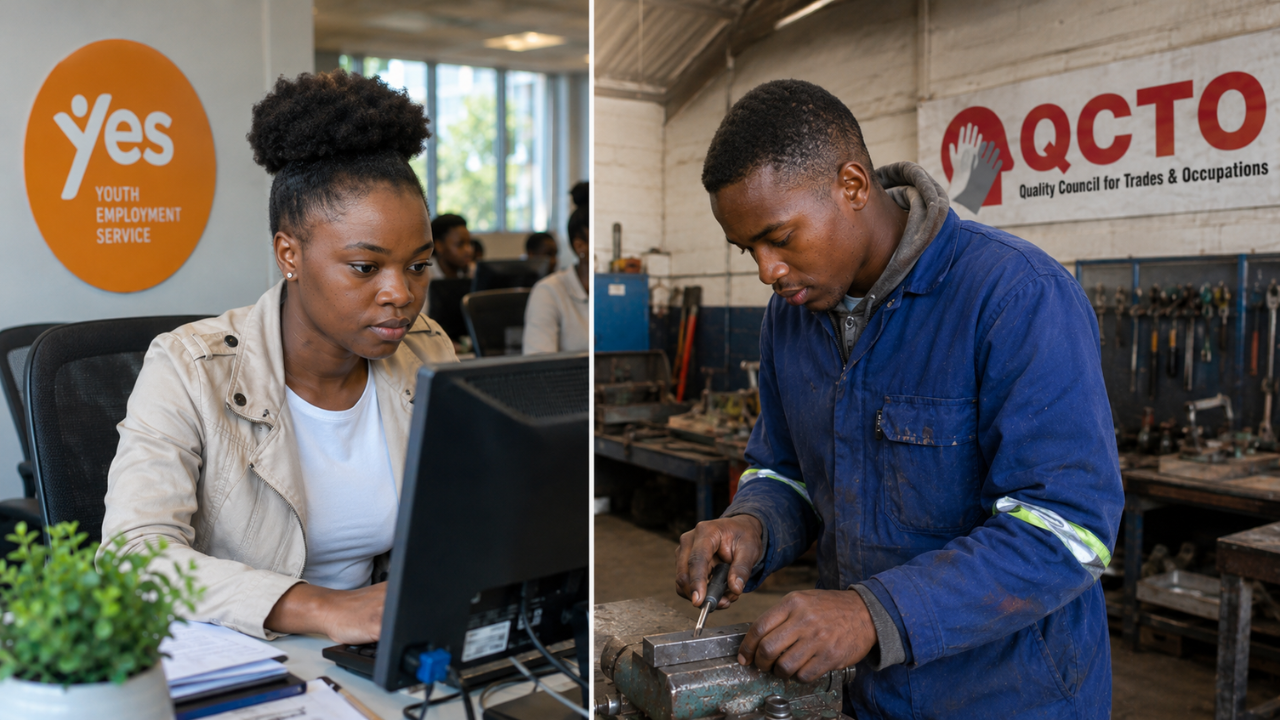
If you have been researching skills development opportunities in South Africa, you have probably come across both learnerships and apprenticeships. While the two terms are often used interchangeably, they are actually very different pathways within the country’s skills development system.
Both programmes combine learning with practical workplace experience, but they differ in their structure, qualifications, duration, and career outcomes.
Understanding the difference between a learnership and an apprenticeship can help you choose the pathway that best aligns with your career goals and interests.
In this guide, YouthSETA explains how each programme works and highlights the key differences between them.
What Is a Learnership?
A learnership is a structured learning programme that combines:
- Classroom-based learning
- Workplace experience
- Assessment and competency development
Learnerships lead to a nationally recognised qualification registered on the National Qualifications Framework (NQF).
They are available across many industries, including:
- Banking
- Information Technology
- Retail
- Insurance
- Business Administration
- Healthcare
- Logistics
Learnerships are designed to improve employability and workplace readiness while helping learners obtain recognised qualifications.
What Is an Apprenticeship?
An apprenticeship is a structured occupational training programme focused primarily on skilled trades.
Apprenticeships combine:
- Technical training
- Workplace learning
- Practical trade experience
The goal is to develop competent artisans capable of performing specialised technical work.
Common apprenticeship trades include:
- Electrician
- Millwright
- Boilermaker
- Diesel Mechanic
- Fitter and Turner
- Instrumentation Technician
- Welder
- Mechanical Fitter
Apprenticeships often lead to a trade test and eventual artisan certification.
The Main Difference
The simplest way to understand the difference is:
Learnerships
Focus on obtaining a qualification and workplace experience within a broad occupational field.
Apprenticeships
Focus on becoming a qualified artisan within a specific trade.
Both pathways involve practical learning, but apprenticeships are generally more technical and trade-focused.
Industries Covered
Learnerships
Learnerships are available across a wide range of sectors.
Examples include:
- Finance
- Insurance
- Retail
- IT
- Customer Service
- Administration
- Healthcare
Apprenticeships
Apprenticeships are concentrated within technical and engineering environments.
Examples include:
- Manufacturing
- Engineering
- Mining
- Automotive
- Construction
- Energy
- Industrial Maintenance
Qualifications and Outcomes
Learnerships
Successful learners receive:
- National Certificates
- Occupational Qualifications
- NQF registered qualifications
These qualifications may support progression into further learning or employment.
Apprenticeships
Successful apprentices typically work toward:
- Trade qualifications
- Artisan status
- Trade Test certification
A qualified artisan is recognised as a skilled tradesperson within their field.
Duration
Learnerships
Most learnerships run for:
- 12 months
- 18 months
- 24 months
Duration depends on the qualification and programme structure.
Apprenticeships
Apprenticeships are often longer.
Many programmes run for:
- 3 years
- 4 years
The duration depends on workplace training requirements and trade test readiness.
Workplace Learning
Learnerships
Workplace exposure forms part of the programme but is balanced with classroom learning.
Apprenticeships
Practical workplace training forms a major component of the programme.
Apprentices spend significant time developing technical competencies under supervision.
Entry Requirements
Learnerships
Requirements vary but commonly include:
- Grade 12
- Relevant qualifications where applicable
- South African citizenship
Apprenticeships
Requirements often include:
- Grade 12
- Mathematics
- Physical Science
- Technical subjects
- N2 or higher qualifications for certain trades
Technical trades generally have stricter entry requirements.
Stipends and Allowances
Both learnerships and apprenticeships may provide stipends or allowances.
The amount varies depending on:
- The employer
- The SETA
- Industry requirements
- Funding arrangements
Applicants should always review programme details carefully.
Which Option Is Better?
There is no universal answer.
The best option depends on your interests and career goals.
Consider a Learnership If You:
- Want a recognised qualification
- Prefer office-based or service industries
- Are interested in business, finance, IT, or administration
- Want a shorter training pathway
Consider an Apprenticeship If You:
- Enjoy technical work
- Want to become an artisan
- Prefer hands-on engineering environments
- Are interested in trades and industrial occupations
Both pathways can lead to rewarding careers.
Employment Opportunities
Learnership Graduates
May find opportunities in:
- Banking
- Insurance
- Retail
- Customer Service
- Administration
- IT Support
Qualified Artisans
May find opportunities in:
- Engineering
- Manufacturing
- Mining
- Construction
- Automotive industries
- Energy sectors
Skilled artisans remain in demand across many sectors of the economy.
Thabang Maimela’s Perspective
One trend I have noticed through YouthSETA is that many young people automatically choose learnerships because they are more widely advertised. At the same time, apprenticeships are often overlooked despite leading to some of the most valuable technical careers in South Africa.
The reality is that both pathways can create excellent career opportunities. The key is understanding your strengths and interests. If you enjoy technical work and solving practical problems, an apprenticeship may be the better fit. If you prefer broader occupational pathways and qualifications, a learnership may be more suitable.
My advice is to focus less on popularity and more on where you see yourself building a long-term career.
— Thabang Maimela
Founder & Editor, YouthSETA
My conclusion
Learnerships and apprenticeships are both valuable components of South Africa’s skills development system.
While learnerships focus on qualifications and workplace readiness across various industries, apprenticeships focus on developing skilled artisans through intensive technical training.
Understanding the differences can help you choose the pathway that aligns with your interests, abilities, and long-term career goals.

I am Thabang Maimela, Founder and Editor of CareersPursuit and YouthSETA, two South African platforms dedicated to helping individuals access employment opportunities, skills development programmes, and career growth resources. Through CareersPursuit, I focus on jobs, internships, apprenticeships, graduate programmes, learnerships, and career advice, while YouthSETA specialises in SETA learnerships, skills programmes, youth development initiatives, and workplace readiness resources. My mission is to make reliable, up to date information more accessible, helping South Africans build skills, improve employability, and navigate their career journeys with confidence. Read more about the author on the About US page.